
Many fans of the Lucifer TV series and The Sandman comics wonder whether Mazikeen has any real roots in Scripture, or whether she is a purely invented character. The truth sits between fiction and ancient tradition, tied closely to Jewish folklore rather than the Bible itself.
This guide breaks down the real meaning, origin, and symbolism behind the name Mazikeen, explains what the Talmud actually says about the “mazikin,” and separates biblical fact from popular fiction.
Is Mazikeen in the Bible? What Scripture Actually Says?

No, Mazikeen does not appear anywhere in the Old Testament or the New Testament. The character is a modern creation, first introduced in comic books and later adapted for television, and no canonical book of the Bible uses this name.
Scripture does contain a broader category of evil spirits and demonic beings shedim, se’irim, and unclean spirits that later writers and storytellers drew on when building fictional demon lore. Mazikeen borrows the atmosphere of these biblical demons without being one of them.
So while the concept of harmful spirits is biblical, the specific character and name “Mazikeen” is not.
What Does Mazikeen Mean in the Bible?
The Bible itself never defines or uses the word “Mazikeen.” The name comes from post-biblical Jewish Aramaic, not from the Hebrew Old Testament text.
Its root, mazik (מזיק), means “one who harms” or “one who damages.” The plural form, mazikin or mazzikin, refers to a class of harmful spirits described in later rabbinic writings, chiefly the Talmud.
In short, the meaning is Jewish and linguistic, not scriptural. It reflects centuries of Jewish tradition that developed after the biblical canon was already closed.
Is Mazikeen a Real Demon?
This depends on what “real” means.
- As a named individual character (Lucifer’s companion, daughter of Lilith), Mazikeen is entirely fictional, invented by writer Neil Gaiman.
- As a category of spirit the mazikin concept is genuinely old, appearing across centuries of Jewish folklore and rabbinic literature.
So Mazikeen the character is fiction built on a foundation of real folklore. The class of spirit she is named after was taken seriously by many historical Jewish communities, even though no single one of them was ever called “Mazikeen.”
What the Talmud Says About Mazikin?
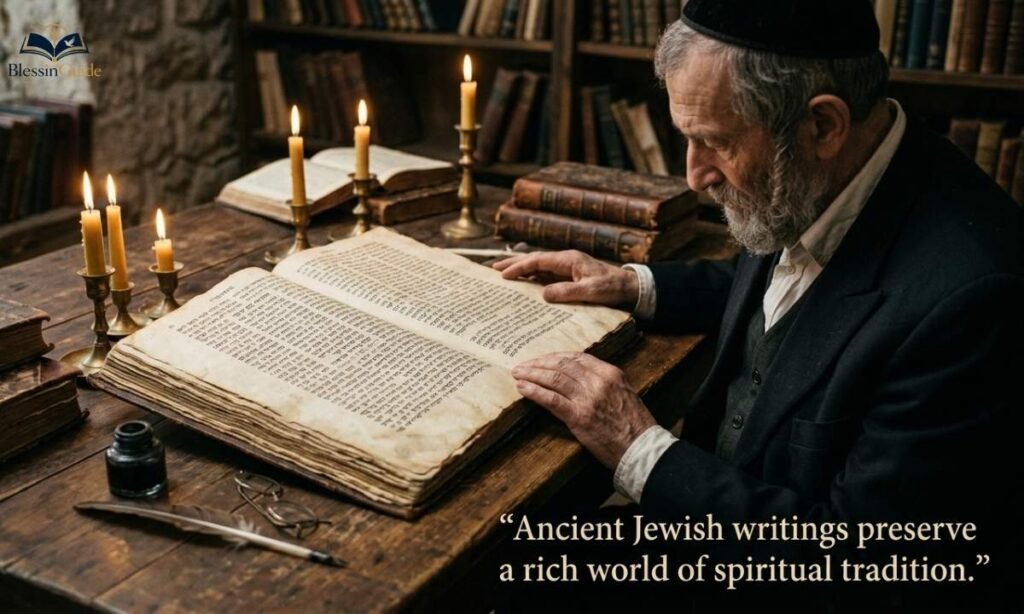
The Talmud, the central text of Rabbinic Judaism, references the mazikin several times, most notably in discussions of creation found in tractate Avot and related rabbinic commentary.
According to this tradition, the mazikin were formed on the sixth day of creation. God began shaping their bodies, but the Sabbath arrived before the work was finished, leaving them as bodiless spirits caught between the angelic and human worlds.
Because of this unfinished creation, the mazikin were believed to share traits with both angels and humans, yet belong fully to neither. Rabbinic sources describe them as invisible, able to move unseen through homes, and capable of causing sudden illness, accidents, or misfortune.
This description of half-finished, in-between beings is strikingly close to how modern fiction portrays Mazikeen, a demon suspended between loyalty and independence, Hell and Earth.
Mazikeen in Jewish Mythology and Folklore
Origins of Mazikin in Jewish Folklore
The mazikin trace back to Jewish Babylonian Aramaic and appear throughout rabbinic literature written in the centuries after the Hebrew Bible was completed. Scholars often compare them to the Arabic concept of invisible, morally ambiguous spirits that inhabit the same world as humans but remain unseen.
What Were Mazikin Believed to Be?
Traditional folklore describes mazikin as:
- Invisible spirits that could occupy empty houses or dark corners
- Beings blamed for unexplained accidents, sudden falls, or illness
- Creatures believed to be most active at night or in lonely places
- Spirits that could sometimes be warded off through prayer or protective customs
The Meaning of Mazikin as Harmful Spirits
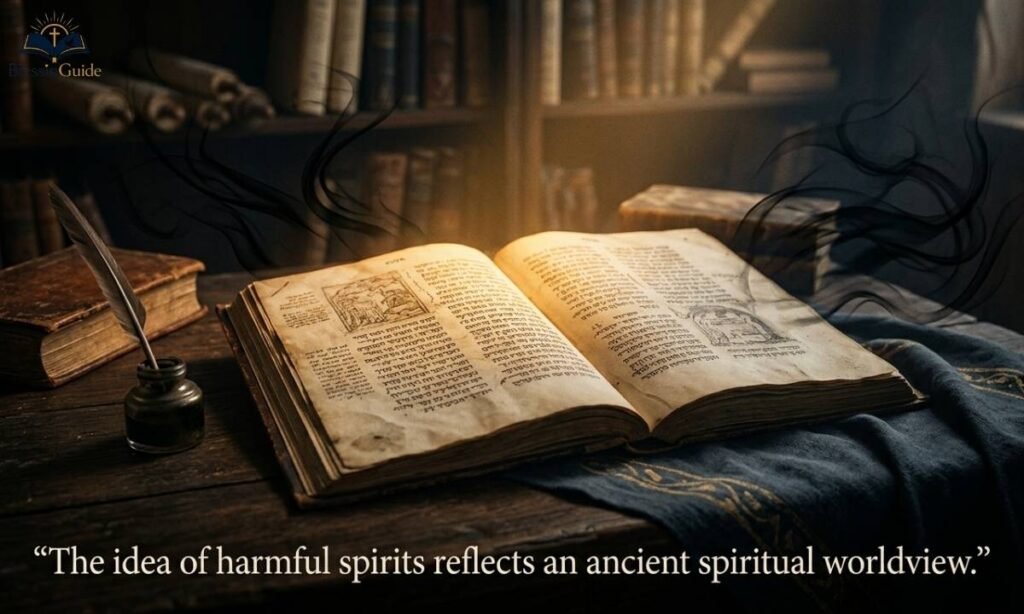
At its core, mazikin simply means “damagers.” The name was not meant to describe one specific demon with a personality or backstory. It described a whole category of unseen forces capable of causing harm, closer to a folk explanation for misfortune than a fully developed mythological figure.
Does the Bible Mention Mazikeen by Name?
Is There a Mazikeen Bible Verse?
No single verse in any Bible translation contains the word “Mazikeen.” Any article, sermon, or study claiming otherwise is referring to broader biblical demonology, not an actual citation.
Biblical Passages About Demons and Evil Spirits
Scripture does address evil spirits directly, even without using the name Mazikeen:
- Deuteronomy 32:17 Israel sacrificing to “demons” (shedim)
- Leviticus 17:7 warnings against sacrificing to goat-demons (se’irim)
- Psalm 106:37 child sacrifice offered to demons
- Mark 5:9 the unclean spirit that identifies itself as “Legion”
- Isaiah 34:14 a night creature referenced as “lilit,” later tied to Lilith folklore
Mazikeen vs. Biblical Demons
| Aspect | Mazikeen (Fiction) | Biblical Demons |
| Source | Comics and TV (Neil Gaiman, Lucifer) | Old and New Testament |
| Named individually | Yes, a distinct character | Rarely mostly categories like shedim, se’irim; “Legion” is an exception |
| First appearance | The Sandman comic, 1990 | Torah and Old Testament era texts |
| Family lineage | Portrayed as a daughter of Lilith | No fixed demon genealogy is given |
| Physical description | Disfigured “demon face” beneath a human disguise | Rarely described physically |
| Role | Individual character with a personality and story arc | General warnings against idolatry and spiritual danger |
Understanding the Origin of the Name Mazikeen
The name carries two layers of meaning: a linguistic root and a deliberate creative choice.
Linguistically, it comes from the Hebrew and Aramaic mazik, “one who damages.” Culturally, the name was chosen by comic book writer Neil Gaiman, who wanted a term that carried genuine mythological weight rather than inventing something from scratch.
In Jewish mystical tradition, names were believed to hold power knowing a spirit’s true name meant having some authority over it. Borrowing “mazikin” for a demon character was a meaningful choice, not a random one.
The anglicized spelling, “Mazikeen,” softened the original Aramaic pronunciation while keeping its ominous sound intact.
Mazikeen Demonology: Meaning and Historical Background
Jewish demonology developed gradually, layer by layer, over more than a thousand years:
- Hebrew Bible period brief, indirect references to shedim, se’irim, and night creatures, with no developed demon hierarchy.
- Second Temple and apocryphal writings texts like the Book of Enoch expand on fallen angels and their offspring.
- Talmudic period rabbis describe mazikin as a distinct class of harmful, bodiless spirits.
- Medieval Kabbalistic writings and later mystical texts, including the Alphabet of Ben Sira, build out figures such as Lilith and connect them to demon lineages.
Mazikeen draws loosely from all four layers, blending the Talmudic mazikin with later Lilith mythology to create a single fictional demon with her own personality and story.
Mazikeen and Lilith: Mythology vs. Fiction
In the comics and TV adaptations, Mazikeen is identified as one of the Lilim, the children of Lilith which places her in a kind of demonic royal lineage.
But this lineage is fiction stacked on later folklore, not Scripture:
- Lilith is not named in the Hebrew Bible in the way pop culture assumes.
- Isaiah 34:14 uses the Hebrew word lilit, which many scholars translate as a type of night bird or wilderness creature rather than a named demon queen.
- The fully developed “Lilith the demon, Adam’s rebellious first wife” story comes from the Alphabet of Ben Sira, a Jewish text written between roughly the 8th and 11th centuries AD long after the biblical canon closed.
So the “Mazikeen, daughter of Lilith” backstory is a modern layering of medieval Jewish folklore onto a fictional character, not a biblical family tree.
Who Is Mazikeen in The Sandman?
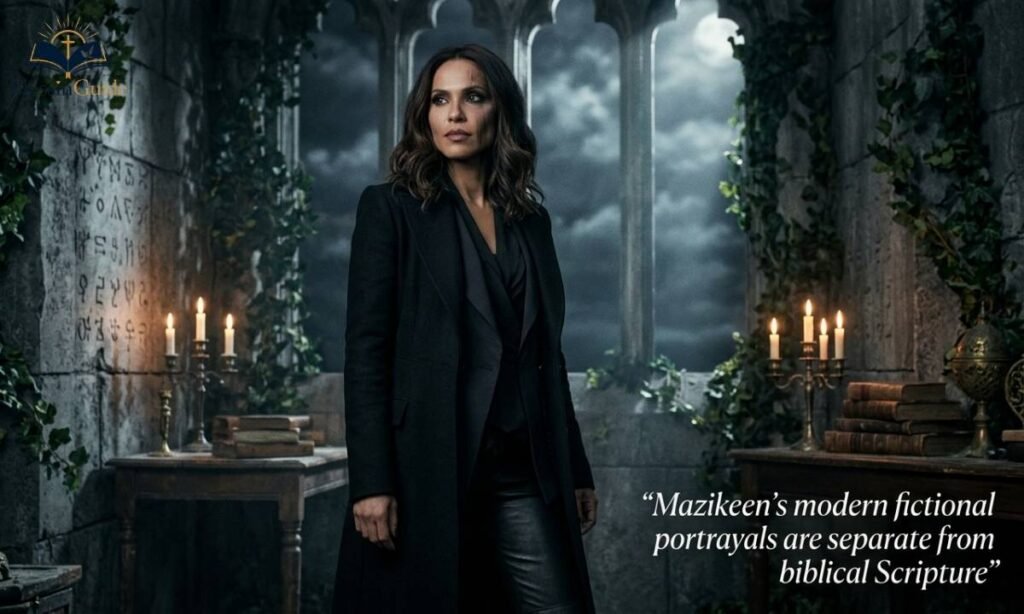
Mazikeen first appeared in Neil Gaiman’s The Sandman comics, introduced during the “Season of Mists” storyline around 1990.
In this original version, she serves as Lucifer Morningstar’s consort and most loyal follower during his reign as ruler of Hell. Half of her face is depicted as disfigured or demonic, a visual signal of her true, non-human nature beneath a human-looking exterior.
She later appears in the spin-off Lucifer comic series, where her role and backstory expand significantly, eventually including a stint ruling Hell herself.
Who Is Mazikeen in Lucifer?
In the Fox and Netflix television adaptation Lucifer (2016–2021), Mazikeen usually called “Maze” is reimagined as a demon bounty hunter and bartender who leaves Hell to accompany Lucifer to Los Angeles.
She works alongside Lucifer at his nightclub, later partners informally with the LAPD, and develops her own arc around identity, belonging, and what it means to have or lack a soul.
Across the show’s six seasons, Maze evolves from a loyal enforcer into a complex character wrestling with love, independence, and her place between Hell and Earth.
Mazikeen’s Relationship With Lucifer
Mazikeen’s bond with Lucifer is one of the most consistent threads across every version of the character. She is fiercely loyal, protective, and often his closest confidante.
The relationship is not romantic in most versions; it plays more like a bond between old comrades tied together by history and mutual respect. As the comics and TV series progress, tension grows as Maze begins questioning her role as his subordinate and seeks an identity of her own, separate from her devotion to him.
Why Does Mazikeen Have a Demon Face?
In both the comics and the TV series, Mazikeen’s disfigured or scarred “demon face” represents her true form beneath a more human-looking disguise.
The visual choice echoes a recurring theme in demon mythology generally: a being that can pass as ordinary or attractive on the surface while concealing something far more dangerous underneath. It reinforces the idea, present in the Talmudic mazikin tradition too, of hidden harm danger that is not obvious until it is already close.
Mazikeen’s Cultural and Spiritual Significance
Beyond straightforward demonology, the name and character have picked up layered meaning over time:
- Liminality existing between two worlds (angel and human, Hell and Earth) without fully belonging to either
- Hidden danger harm that arrives quietly, through the ordinary, rather than through open confrontation
- Independence and reinvention in modern pop culture, fans have reclaimed the name as a symbol of fierce self-determination
- A bridge between traditions the name links ancient Jewish demonology, medieval mysticism, and modern entertainment in a single word
Mazikeen in Popular Culture: From Jewish Folklore to Modern Fiction
The name’s journey from an obscure Aramaic term to a household character spans centuries:
| Era | Milestone |
| Talmudic period (roughly 200–500 AD) | Rabbis describe the mazikin as spirits created on the sixth day, left bodiless |
| Medieval period (8th–11th century) | The Alphabet of Ben Sira develops the Lilith mythology later linked to Mazikeen |
| 1989–1990 | Neil Gaiman introduces Mazikeen in The Sandman and the Lucifer comic spin-off |
| 2016–2021 | Fox and Netflix’s Lucifer brings Mazikeen (“Maze”) to mainstream television |
| 2020s | Mazikeen becomes a recognized character name and an occasional baby-name choice |
This journey from an obscure Aramaic term for unseen, harmful spirits to a leading character loved by millions of viewers shows how ancient folklore can be reshaped for a modern audience without ever claiming to be Scripture.
Common Misconceptions About Mazikeen and the Bible
- “Mazikeen is a demon named in the Bible” False. The name never appears in any canonical biblical text.
- “Lilith and Mazikeen are officially mother and daughter in Jewish tradition” False. This lineage was created for fiction, blending later folklore with an invented character.
- “Mazikin were worshipped as gods” False. They were viewed as minor, mischievous, and dangerous spirits, never objects of worship.
- “The Talmud describes Mazikeen specifically” False. The Talmud discusses mazikin as a class of spirit, not an individual character with this name.
Is the Name Mazikeen Safe or Appropriate to Use Today?
Many parents and creators ask whether the name carries any real spiritual weight or danger.
For most people, Mazikeen functions today as a striking, unique baby name or fictional character name rather than an active spiritual title. Its folklore roots are historical and linguistic rather than something believed to carry literal power in most modern communities. As with any name drawn from mythology or folklore, comfort with the background is a matter of personal or religious conviction rather than settled doctrine.
Frequently Asked Questions
What is Mazikeen in the Bible?
Mazikeen is not a biblical figure. She is a fictional demon character created for comics and television, whose name borrows from a Jewish folklore term for harmful spirits.
Does the Bible mention Mazikeen by name?
No. No book, chapter, or verse in any Bible translation uses the name Mazikeen.
What does Mazikeen mean in the Bible?
The Bible does not define the word at all. Outside Scripture, the name comes from the Hebrew and Aramaic root mazik, meaning “one who harms.”
Is Mazikeen a real demon?
Not as an individual. The mazikin, a class of harmful spirits she is named after, do appear in genuine Jewish folklore and Talmudic writings.
Is there a Bible verse about Mazikeen?
No specific verse exists. The Bible discusses demons and evil spirits generally, using different names such as shedim and Legion.
What is the connection between Mazikeen and Lilith?
In fiction, Mazikeen is portrayed as one of Lilith’s children. This family tree comes from later Jewish folklore, not the Bible itself.
Who is Mazikeen in Lucifer?
In the Lucifer TV series, Mazikeen (“Maze”) is a demon bounty hunter and Lucifer’s closest confidante, played by Lesley-Ann Brandt.
Final Thoughts
Mazikeen sits at an interesting crossroads between fiction and history: a character invented for comics and television, built on genuinely old Jewish folklore about harmful, half-formed spirits called mazikin. Scripture itself never mentions her by name, but the wider biblical world of demons and evil spirits clearly shaped the atmosphere around her creation.
Understanding this distinction between biblical fact versus later Jewish tradition versus modern fiction helps separate curiosity about a beloved TV character from genuine biblical study, while still appreciating how deep and layered her name’s history really is.
